REFI2 product overview

Token structure

REFI2 and sREFI2

The protocol uses two tokens so liquidity and yield accounting stay separate: a transferable base asset you can trade, and a non-transferable staking position that records your entitlement to real-world yield.

REFI2

REFI2 utility token

Transferable access to the protocol

REFI2 is the primary on-chain instrument: collateral-backed, targeted around a $1.00 value, and used to enter staking, provide liquidity, or exit via secondary markets.

Transferable
Yes — tradeable on-chain
Value anchor
~$1.00 USD target (peg)
Yield
None directly — stake to earn via sREFI2
How you get it
Mint against collateral, DEX purchase, or OTC
How you exit
DEX liquidity, redeem / OTC where applicable
Backed by
Secured Canadian mortgage book and reserves

sREFI2

sREFI2 staking position

Non-transferable yield entitlement

Stake REFI2 to receive sREFI2—a receipt token that tracks your staked balance and accrues the protocol’s advertised staking yield, distributed in USDC when you claim.

Transferable
No — staking position only
Value anchor
Not separately priced or traded
Yield
~8% on staked REFI2 (paid in USDC)
How you get it
Stake REFI2 after KYC where required
How you exit
Unstake back to REFI2, then exit REFI2
Represents
Staked principal plus yield entitlement

Peg defense

Nine layers of peg defense

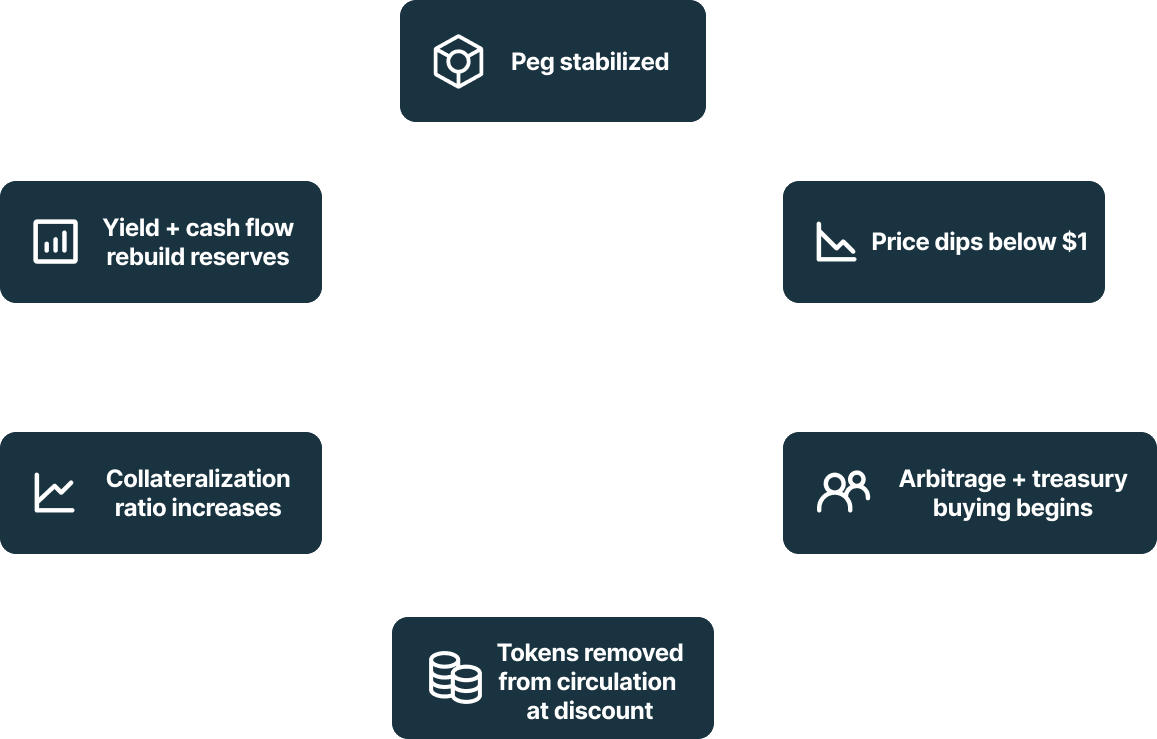
REFI2 is designed to trade near $1.00. Nine reinforcing mechanisms work together—real asset backing, market stabilization, redemption at par, and institutional support—so secondary prices gravitate back toward par even under stress.

Real asset backing

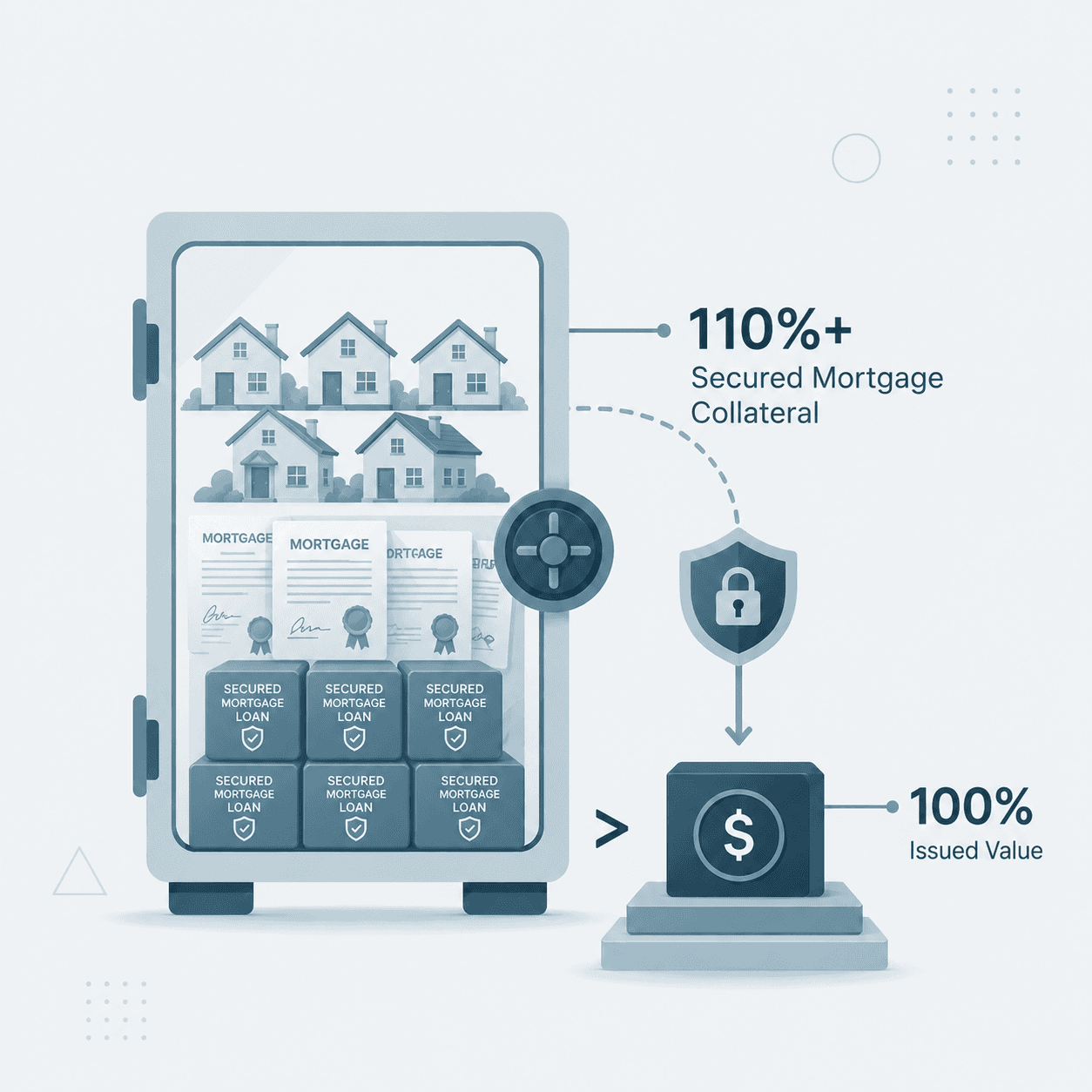
110%+ overcollateralization

Token supply stays backed by secured assets worth more than outstanding REFI2, creating a structural buffer before market stress reaches holders.

  • Minimum collateralization above 110% of circulating supply
  • Collateral value monitored against token liabilities
  • Buffer absorbs volatility before it reaches the peg
110%+ overcollateralization illustration

Business model

How capital flows end to end

Step 05

Allocation & liquidity support

Incoming yield is allocated across defined buckets: approximately 8% is paid to sREFI2 stakers as the advertised staking return; the remainder supports operational and default reserves, retained earnings / treasury, and liquidity reserves. These reserves, redemption paths, and market-support mechanisms help maintain peg stability while preserving capital buffers and long-term protocol resilience.

5 / 5

Yield vehicle comparison

How REFI2 compares across the yield landscape

Yield vehicle comparison chart scoring stablecoin yield, private credit, REITs, Treasuries, and the REFI2 ecosystem across five categories

SCORING BY CATEGORY

Why each category received its scores

Real yield quality

Is return funded by economic cash flow—or by emissions, leverage, or opaque subsidies?

Stablecoin yield can be attractive, but sources vary across lending, trading fees, incentives, and protocol risk. Private credit and REITs can produce real income from borrower payments or real estate cash flow, though structures and liquidity differ. Treasuries provide transparent government-backed yield, but rates are policy-driven and can compress. REFI2 targets yield from performing mortgage interest—a repeatable coupon from secured loans, not token emissions.

VehicleScore
Stablecoin yield
Private credit
REITs
Treasuries
REFI2 Ecosystem

Why REFI2 scores here

Mortgage interest is the primary engine; distributions are tied to borrower performance on secured Canadian loans.

Scores are illustrative for product education and do not constitute investment advice. See Resources for full risk and methodology detail.

Get In Touch